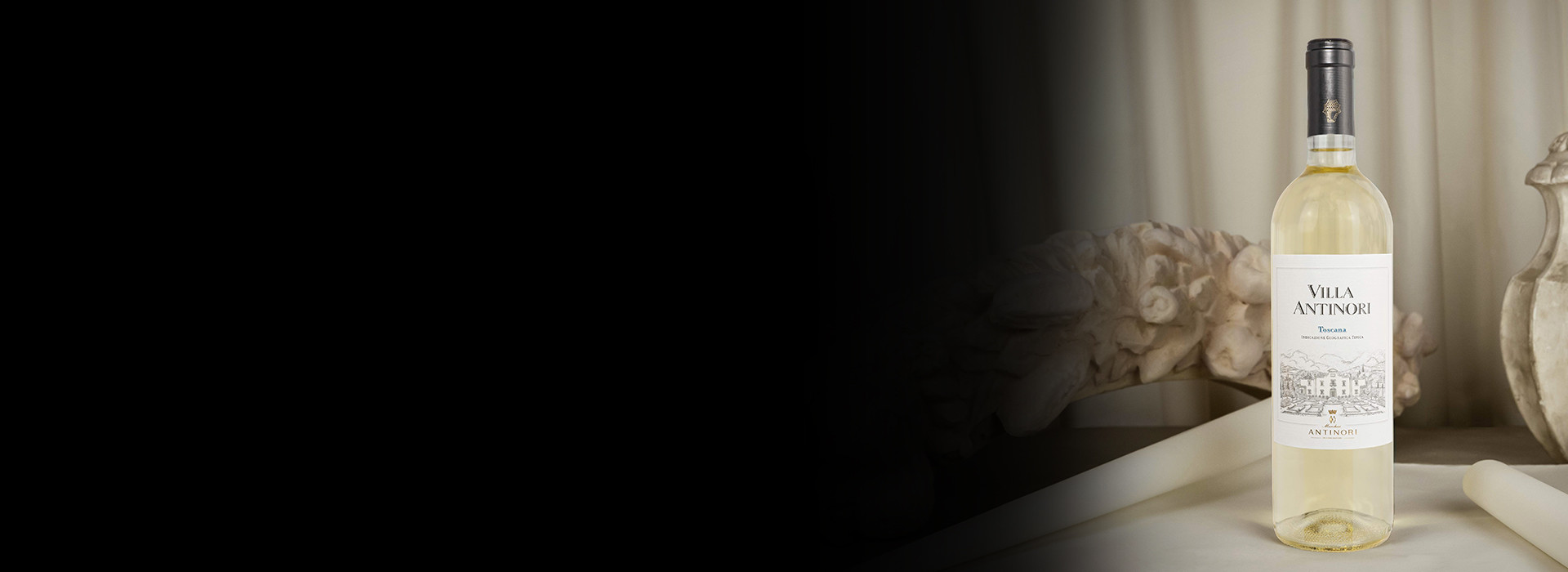
Villa Antinori Bianco
Climate
The 2025 growing season began with a mild winter and spring, both characterized by abundant rainfall, which allowed the accumulation of significant groundwater reserves in the soils. Summer was generally dry and regular, with some beneficial rainfall and a couple of heat peaks recorded at the end of June and in August. The substantial water reserves accumulated during the first part of the year helped prevent water stress, allowing ripening to progress regularly. Harvesting operations took place about one week earlier than in 2024 and began in mid-August with Pinot Grigio, followed by Pinot Bianco between the end of the month and early September. Vermentino, the latest-ripening variety, was harvested from early to mid-September.
Vinification
Freshly harvested grapes were destemmed and delicately pressed. The must was chilled to a temperature of 10 °C (50 °F) to favor natural clarification; after 48 hours it was transferred to stainless steel tanks where alcoholic fermentation took place at a temperature that did not exceed 17 °C (63 °F). The wine was stored in stainless steel tanks at a controlled temperature of 10 °C (50 °F) until bottling, which began in January 2026.
Historical Data
Villa Antinori Bianco is one of the historic wines of the Antinori family. It was produced for the first time by Niccolò Antinori in the 1931 vintage and since then the label has remained virtually unchanged, as has the production philosophy, oriented towards a full representation of the wine’s source, the place where its grapes are cultivated.
Tasting Notes
Villa Antinori Bianco 2025 is straw yellow with greenish hues. The nose is intense, marked by fruity aromas of citrus fruit, green apple, and pear, which blend with sensations of orange blossoms. On the palate it is fresh, enveloping, pleasant, and savory.
The Wine
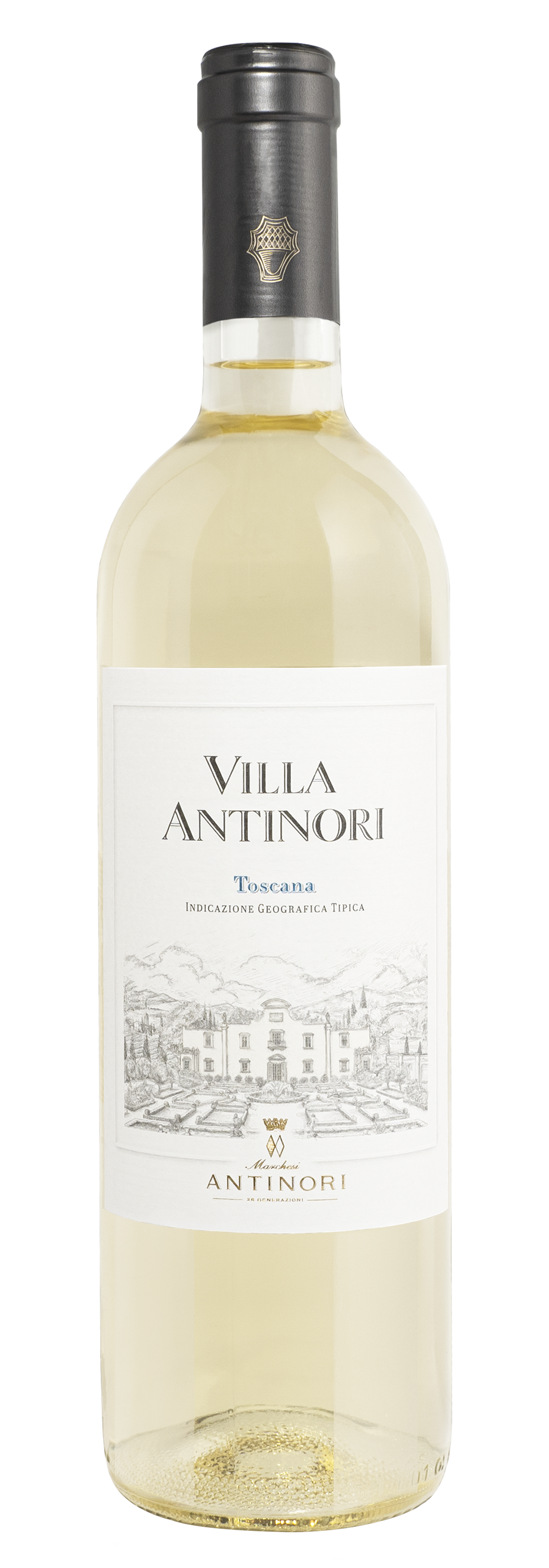
A traditional white wine produced in 1931 by Marchese Niccolò Antinori. Villa Antinori Bianco IGT Toscana is a fine expression of the Tuscan territory by blending traditional white grapes with other varieties. The bouquet is fresh and elegant but with a marked character.
Climate
The 2025 growing season began with a mild winter and spring, both characterized by abundant rainfall, which allowed the accumulation of significant groundwater reserves in the soils. Summer was generally dry and regular, with some beneficial rainfall and a couple of heat peaks recorded at the end of June and in August. The substantial water reserves accumulated during the first part of the year helped prevent water stress, allowing ripening to progress regularly. Harvesting operations took place about one week earlier than in 2024 and began in mid-August with Pinot Grigio, followed by Pinot Bianco between the end of the month and early September. Vermentino, the latest-ripening variety, was harvested from early to mid-September.
Vinification
Freshly harvested grapes were destemmed and delicately pressed. The must was chilled to a temperature of 10 °C (50 °F) to favor natural clarification; after 48 hours it was transferred to stainless steel tanks where alcoholic fermentation took place at a temperature that did not exceed 17 °C (63 °F). The wine was stored in stainless steel tanks at a controlled temperature of 10 °C (50 °F) until bottling, which began in January 2026.
Historical Data
Villa Antinori Bianco is one of the historic wines of the Antinori family. It was produced for the first time by Niccolò Antinori in the 1931 vintage and since then the label has remained virtually unchanged, as has the production philosophy, oriented towards a full representation of the wine’s source, the place where its grapes are cultivated.
Tasting Notes
Villa Antinori Bianco 2025 is straw yellow with greenish hues. The nose is intense, marked by fruity aromas of citrus fruit, green apple, and pear, which blend with sensations of orange blossoms. On the palate it is fresh, enveloping, pleasant, and savory.

Villa Antinori
Villa Antinori was first of all an idea, a plan that envisioned the winemaking process: research and development on one side and historical heritage on the other. Villa Antinori is an important corner stone as its name is associated with over 100 years of history. At the same time it represents ongoing progress. The one essential principle is continuous research for increasingly higher quality standards. This idea produced two different wines that share a common passion for quality: Villa Antinori Rosso and Villa Antinori Bianco. Villa Antinori was originally produced in 1928 by Marchese Niccolò Antinori as a Chianti Classico that could age and that would improve over time. Soon after, Villa Antinori was found in the most prestigious cellars in embassies, royal houses, important hotels and restaurants. In 1931, Villa Antinori Bianco was made from traditional Trebbiano grapes. In the 1980’s a small percentage of Chardonnay was added in order to give the wine better structure.


Antinori Estates




Estates in Italy


