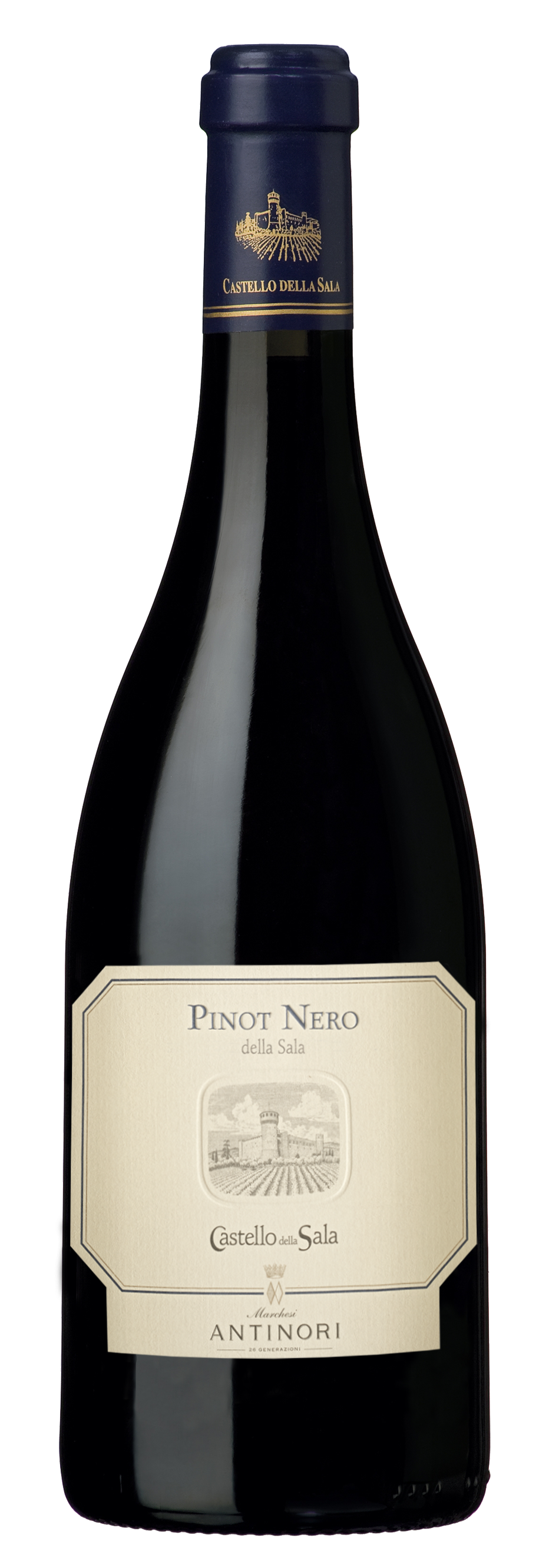
Pinot Nero 2008
Climate
The 2008 vintage is truly one to remember: the winter, which was rather mild, was followed by a spring with intense precipitation, which was, in turn, followed by a summer with beautiful weather. This climatic progression led up to a very interesting harvest, which began with the picking of the first varietals around the end of August and ended with the last varietals at the beginning of October. The beautiful weather which characterized the entire period of harvesting allowed us to carefully and systematically select the best and most perfectly ripened grape bunches, giving us excellent raw material to work with. The wine is balanced: flavored and well structured, with a right alcoholic level.
Vinification
The grapes were harvested in vineyards which are located at an altitude of 400 meters (above sea level) on the Castello della Sala estate in Umbria, near Orvieto. After destemming and a partial pressing, the grapes were put into 50 hl steel tanks. Maceration lasted for approximately one week, during which great care was taken to ensure the best possible extraction of color. Alcoholic fermentation took place at a temperature of 26° C, and was concluded in French barriques (Alliers, Troncais), where malolactic fermentation was also completed. This was followed by 8 months of aging in the barriques, after which time the wine was bottled. It was subsequently bottle-aged for an additional 15 months in the historical wine cellars of Castello before being released on the market.
Tasting Notes
This wine has garnet-colored tinges and offers aromas of cherry, raspberry, and spices. It is characterized by an elegant structure while showing a strong personality, which make it well-balanced and elegant, giving it a Burgundy style.
The Wine
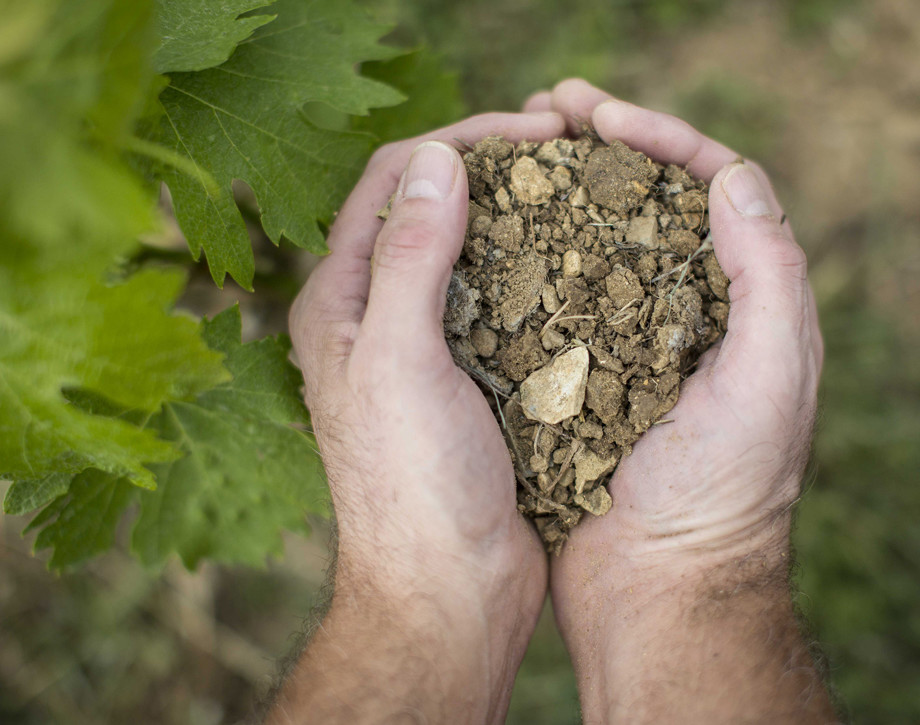
The first vintage to be produced was the 1990 vintage. The wine is made entirely with Pinot Nero grapes and is considered Cervaro’s alter ego: together they represent the two different expressions of Castello della Sala’s complex and refined spirit. Four hectares (10 acres) of Pinot Nero vineyards sit at an altitude of 400 meters (1312 feet) above sea level on calcareous soils rich in fossils with sedimentary sands from the Pliocene epoch.
A red amidst whites
At Castello della Sala, an area historically important for white wines, Pinot Nero offers an authentic and typical expression of its variety with a strong territorial character.
Winding vineyards
The 4 hectares (10 acres) of Pinot Nero grow along the hillsides shaping the landscape into a series of sinuous terraced vineyards.
Understanding nature
The particularly hot climate of Castello della Sala has forced agronomists to invent new ways to protect the grapes from the hot summer sun. The vines’ shoots are allowed to grow in length and are then folded over the plant so its leaves can shade the Pinot Nero grape clusters.
Climate
Mild winter weather and very limited precipitation marked the beginning of the 2023 growing season. Spring brought higher than average levels of rainfall that recharged groundwater reservoirs in vineyard soils, slowing down budbreak and vegetative growth. Flowering took place towards the end of May and fruit set followed one week later, about 7 days later than seasonal averages. Warmer summer-like temperatures set in the last half of July and lasted throughout the end of August, accompanied by optimal temperature swings between day and night. These conditions allowed the grapes to progress through a gradual and well-balanced ripening phase producing fully mature fruit. Weather conditions were favorable during harvesting activities allowing a methodical and careful selection of the best grapes to enhance the finest expression of Pinot Nero. The grape harvest began the first week of September; grapes presented outstanding freshness and an exceptional aromatic profile.
Vinification
After destemming and gentle crushing, the grapes were transferred into small stainless steel truncated cone shaped tanks where cold maceration was performed over a period of three days. Alcoholic fermentation followed at a controlled temperature of 26 °C (78.8 °F) and lasted for about one week and was then completed in 228-liter oak where the wine completed malolactic fermentation and continued to age for several months. Pinot Nero della Sala aged in the bottle in the castle’s historical cellar for an additional period before being released for sale.
Historical Data
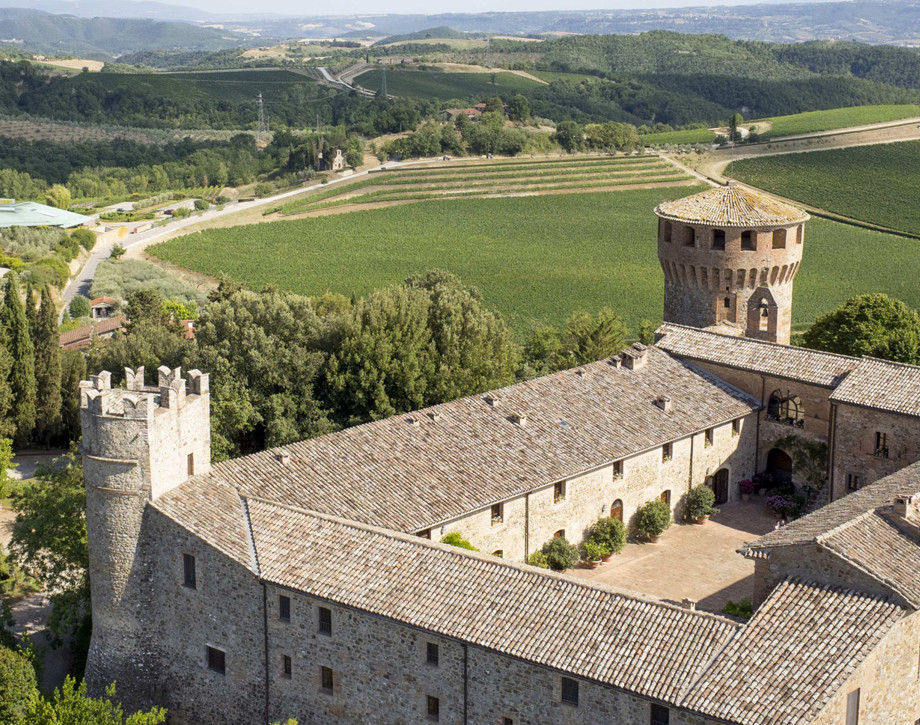
The ten acres (four hectares) of Pinot Noir grapes at the Castello della Sala estate are situated at an altitude of over 1300 feet (400 meters) above sea level on calcareous soils rich in marine fossils which alternate with strata of sedimentary sands from the Pliocene epoch. The wine was first produced in 1990. Castello della Sala is a fortress erected in the 14th century located approximately ten miles (18 kilometers) from the city of Orvieto and was acquired by the Antinori family in 1940.
Tasting Notes
Pinot Nero della Sala 2023 is bright garnet red in color. The nose expresses a generous and complex bouquet with floral notes of violets and dried roses meet fruity aromas of crisp cherries and raspberries, accentuated by delicate citrus hints of red oranges. Impressions of spices are refined and well-integrated with hints of pink pepper, coriander, cloves accompanied by light balsamic notes and medicinal herbs. The palate is intense, dynamic, mouth filling with a juicy entry sustained by excellent freshness. Tannins are silky, refined and perfectly mature. This Pinot Nero offers a well-balanced structure and can be enjoyed immediately but will be able to express its full potential after several years of aging in the bottle.
Castello della Sala
Castello della Sala is located in the Umbria region, not far from the Tuscan border, about 18 kilometers from the historic city of Orvieto. The Medieval castle’s property extends over an area of 600 hectares (1482 acres), 229 hectares (495 acres) are planted with vineyards at an altitude that varies between 220 and 470 meters above sea level (722/1541 feet) on the gently rolling hillsides that characterize the beautiful countryside in this area. Castello della Sala is the perfect place for growing white varieties. The vines grow in clay and calcareous based soils, rich in fossil shells, and they are well exposed to the rising of the sun with an excellent difference of temperature between day and night. The one exception to the rule is Pinot Noir, the only red variety that has found in this area ideal growing conditions to best express its full potential.
Soil
Calcareous soil with fossils and sedimentary sand dating back to the Pliocene period.


Antinori Estates




Estates in Italy


