Soil



The Wine
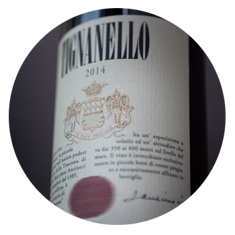
Tignanello was the first Sangiovese to be aged in barriques, the first contemporary red wine blended with untraditional varieties (specifically Cabernet) and one of the first red wines in the Chianti Classico region that didn’t use white grapes. Tignanello is a milestone. It’s produced with a selection of Sangiovese, Cabernet Sauvignon and Cabernet Franc.
The Design
The label was designed by Silvio Coppola in 1974 for the release of Tignanello 1971. The idea to commission this artist was discussed at an event at Castello della Sala in 1973. Silvio Coppola was an important Italian graphic and interior designer who was famous for his minimalist lighting fixtures and austere furniture but also for book cover designs for Italian publishing company Feltrinelli. Silvio Coppola was the perfect match for the job.
The Signature
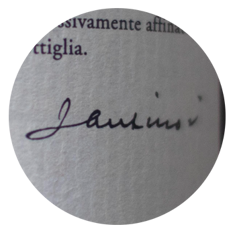
Marchese Piero Antinori, decided to have his father, Niccolò Antinori, sign the label as a sign of recognition for his father’s confidence in him.
Te Duce Proficio
The historic family crest of the Antinori family
The Sun
Tignanello’s stylized “Sun” by Silvio Coppola
Climate
The 2023 growing season in Chianti Classico began with cold dry weather during the winter months, and especially at the end of March, timing of budbreak was consistent with seasonal averages. Cool and rainy conditions persisted from the end of April throughout the first half of June. The summer months brought hot dry weather uninterrupted by extreme heat spikes that ensured an optimal balance in vegetative vigor and crop load. Moderate precipitation in August and normal fall weather in September and October allowed the fruit to begin veraison and reach peak ripeness. The grape harvest for Tignanello began around September 20th for Sangiovese and was completed during the first half of October with Cabernet
Vinification
This growing season’s climate trends challenged us to be focused and diligent both in the vineyards during harvesting activities and when grapes were brought to the cellar where sorting operations and initial winemaking processes were essential to achieve optimal results. During fermentation in truncated conical tanks, each individual must was macerated on the skins giving particular emphasis to preserving aromas, extracting color, and encouraging desirable tannins that were supple and elegant. Racking was performed only after rigorous daily sampling and tasting. Once separated from the skins, the wine was transferred into small oak barrels where it underwent malolactic fermentation to accentuate aromatic finesse and complexity. Aging took place in French oak barrels and a small percentage in Hungarian oak, predominantly new barrels, for a total period of 13 months; after an initial period of aging the lots separately, they were blended then completed barrel aging. Tignanello, crafted mainly with Sangiovese and a small percentage of Cabernet Sauvignon and Cabernet Franc, underwent an additional 12-month period of aging in the bottle before being released.
Historical Data
Tignanello is produced exclusively from the vineyard of the same name, a parcel of some 190 acres (77 hectares) with limestone-rich soils and a southwestern exposure at 1150-1325 feets (350-400 meters) above sea level at the Tignanello estate. It was the first Sangiovese wine to be aged in small oak barrels, the first modern red wine to use such non-traditional varieties as Cabernet in the blend, and among the first red wines from the Chianti Classico area to be produced without white grapes. The wine, originally called "Chianti Classico Riserva Vigneto Tignanello" (a Chianti Classico Riserva from the Tignanello vineyard), was produced for the first time from a single vineyard parcel in 1970, when the blend contained 20% of Canaiolo and 5% of Trebbiano and Malvasia, both white grapes, and the wine aged in small oak barrels. In 1971 it became a Tuscan red table wine rather than a Chianti Classico, and was called Tignanello. In the 1975 vintage the percentage of white grapes was definitively eliminated from the blend. Ever since 1982, the blend has been the one currently used. Tignanello is bottled only in favorable vintages, and was not produced in 1972, 1973,1974, 1976, 1984, 1992, and 2002.
Tasting Notes
Tignanello 2023 is an intense ruby red color. The nose opens with intriguing notes of ripe cherries, pomegranates and oranges that lead to delicate hints of hibiscus and violets. The generous bouquet follows over to hints of sweet spices of cocoa and pencil lead and closes with delicate impressions of white pepper and cranberries. Entry on the palate is precise, pure and reveals a juicy, mouth-filling mid-palate with silky supple tannins. The long, savory finish delivers distinct notes of blood oranges and roasted hazelnuts.
Tenuta Tignanello
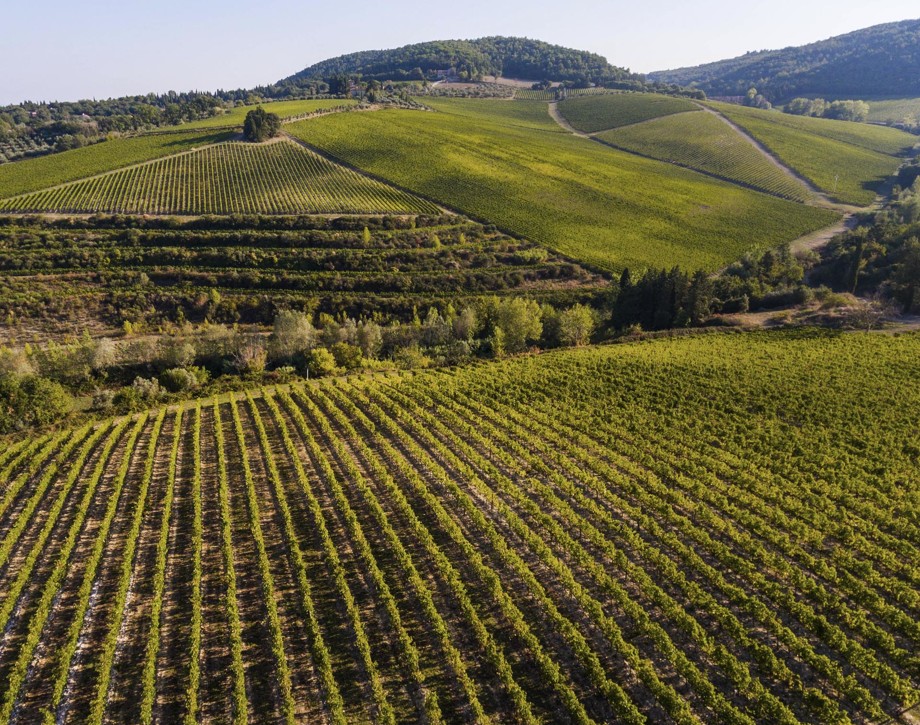
The Tenuta Tignanello estate is in the heart of Chianti Classico, in the gently rolling hillsides between the Greve and Pesa river valleys. It extends over an area of 319 hectares (788 acres), of which about 165 (407 acres) are dedicated to vines. Two of the estate’s prized vineyards are on the same hillside, Tignanello and Solaia, on soils that originated from marine marlstone from the Pliocene period rich in limestone and schist. The vines enjoy hot temperatures during the day and cooler evenings throughout the growing season. The estate’s two signature wines, Solaia and Tignanello, are produced from these vineyards and have been defined by the international press as “among the most influential wines in the history of Italian viticulture”. According to Marchesi Antinori, Solaia and Tignanello are an ongoing challenge and a never-ending passion. The Tignanello estate has vineyards of indigenous Sangiovese grapes as well as some other untraditional varieties such as Cabernet Franc.
Soil
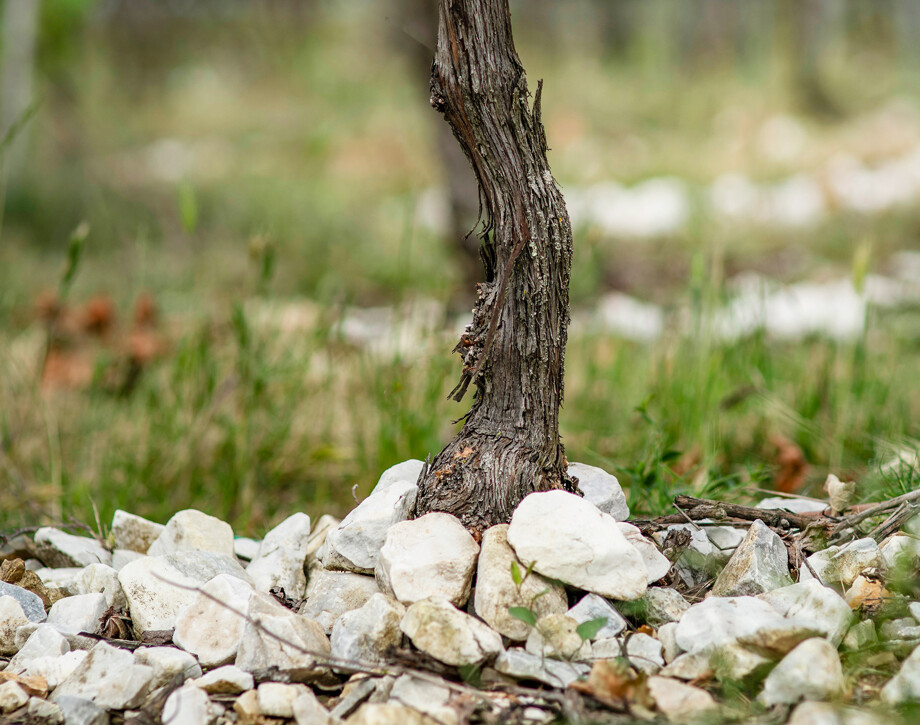
Calcareous rocky soils with alberese (marl limestone) and marl.


Antinori Estates




Estates in Italy


